

We have an important but troubling thing to talk about today regarding sapphic publishing in the era of AI.
The publishing landscape has changed a lot in the past few years. While it used to be possible for authors to gain visibility through Amazon’s algorithm, build a following, and earn additional income from intellectual property by commissioning audiobooks and translations, it’s become increasingly impossible for authors who do not wish to use AI to compete.
In the past year, many authors have seen their sales plummet by an average of around 30% (TB and Miranda can personally attest to this). Meanwhile production costs, not to mention basics like housing, groceries, and gas, continue to rise.
And it’s equally challenging for readers who do not want AI products to find human-created books and audio. The frustration in online reader spaces is at an all-time high.
We recently learned about a worrisome change on the AI front. Unfortunately, a major sapphic publisher has started using it, and we fear that’s the tip of the iceberg.
What Amazon is doing to encourage AI usage in publishing
If you are an audiobook fan, you may have encountered “Virtual Voice,” which is Amazon’s proprietary program where an author of an ebook can create an audiobook narrated by AI just by clicking a few buttons. Since it was rolled out, human narrators have reported worrying dips in income while listeners report having to wade through a sea of Virtual Voice to find real human audiobooks.
Amazon is at it again, this time with translations.
Amazon is rolling out a beta program called “Kindle Translate,” which uses AI to translate English-language books into German, Spanish, French, Italian, and Portuguese. It’s currently invitation-only, but in the past, beta tools have eventually rolled out to all KDP users.
Kindle Translate does not use human input for any part of the process. Unlike with audiobooks, this doesn’t only impact how the words sound, but literally what full sentences and passages mean. Any mistake the AI makes in word choice, any nuance it misses, and every emotion it gets wrong, will remain in the published book for readers to discover at the cost of their own time and money.
Even before Amazon launched its AI translation tool, the market was being flooded with poor translations made by AI. But with Amazon promoting their free AI translation tool, making it as easy as pushing a button on the KDP dashboard, expect it to become even more rampant than virtual voice.
Quality translations are expensive. With a flooded market, authors who want to support humans simply won’t be able to afford translations. This means readers in non-English markets will only have inferior AI translations to read.
Translators and foreign language editors, already hard hit, will lose their livelihoods. It’s happened to graphic designers with the rise of AI covers. It’s happened to human narrators with the rise of Virtual Voice, and it’s happening every day to human authors who are giving up publishing because they can’t compete with the tidal wave of AI slop.
A personal example of how AI is hurting authors and human translators
As indie authors, we’ve been translating our books into German for a few years now. (The German language is the largest book market after English). We use a trusted human translator and editor team for our translations. The quality is evident in the good reviews we receive, especially the ones that praise the translation specifically.
In the beginning, our translations would generally break even by the end of the first year after publication and go on to earn a modest return. But lately we’ve noticed it’s getting harder and harder just to pay back out-of-pocket expenses, with costs running in the thousands of dollars. This is similar to producing high-quality audiobooks but, it should be noted, with a smaller audience for the finished product.
We can’t afford to pay for translations that lose money, and we refuse to publish work that doesn’t meet our standards. Unfortunately, that means that the German translation we recently published is likely to be our last for a long time (hopefully not forever). That means that the translator and editor we’ve been paying for the past several years will not be receiving a steady income they’ve probably come to rely on.
Now for the concerning acceptance of Kindle Translate in sapphic publishing
Recently, we’ve discovered that a major sapphic publisher has opted to use Amazon’s “Kindle Translate” for two of their biggest authors. We were shocked because both authors are highly respected in the sapphic fiction world and one is considered an icon. We admired both of these authors, as do many in the sapphic fiction community.
To say that this development disappointed us would be an understatement. Considering the level of influence they have in the sapphic marketplace, it wouldn’t be surprising if a lot of authors decide it’s fine to use Kindle Translate because of this example.
How to determine if the book you’re reading is Kindle Translated
If you want to know if a book you’re interested in was produced with Kindle Translate, check under the cover image. You’ll see “Translated with Kindle Translate.” That means the translation was done completely by AI.
Here’s a screenshot:
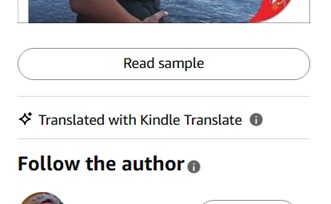
Between the Read Sample and Follow the author options under the cover is Translated with Kindle Translate.
Another tell is the white border around a cover that will have the original title, not the translated one.
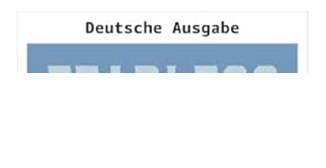
You can see the white border and the words Deutsche Ausgabe at the top of the cover.
Here’s the same cover in French:

You can see Edition francaise at the top.
If you want to make sure a translated book was made by a human, it’s common (but not required) for the translator’s name to be listed alongside the author’s, similar to how a human narrator is listed for an audiobook. That’s a good indicator of a human-translated book.
Why this matters
Publishing is a difficult business, especially in a niche as small as sapphic fiction. Margins are razor thin. By the time an indie author hires a cover designer, editor, and potentially a narrator and translator, they have to sell hundreds of copies of their book just to not lose money. Many authors in our community are relying on money from publishing to provide a cushion in retirement. Others publish as a full time career, which is a lifeline in a difficult job market where companies are laying people off in droves (also because of AI).
The more authors struggle, the fewer will remain. You’ve probably noticed the charts have been taken over by AI books cranked out by people who are using this community of readers to make a quick buck. New “authors” are dominating the charts daily, and we promise you it’s not because this is a great time for real debut authors to launch successful careers.
Meanwhile, authors who used to reliably publish for our community are dropping out at an alarming rate. They feel burnt out. Defeated. Like nobody cares about the work they put in, and like it’s impossible to get ahead.
Please support human authors, artists, narrators, translators, and editors. Without your support, we won’t be able to continue.