

Welcome to IHS’s Great Pride Giveaway!
June is a special month for us at IHS Headquarters because it’s Pride season. Which means rainbows galore! That makes us truly happy because one of our missions in life is to spread rainbows and to show our pride every single day.

PRIDE PHOTO
TB and Miranda had a special photo shoot at Miranda’s parents’ house to snap many Pride photos like this one:
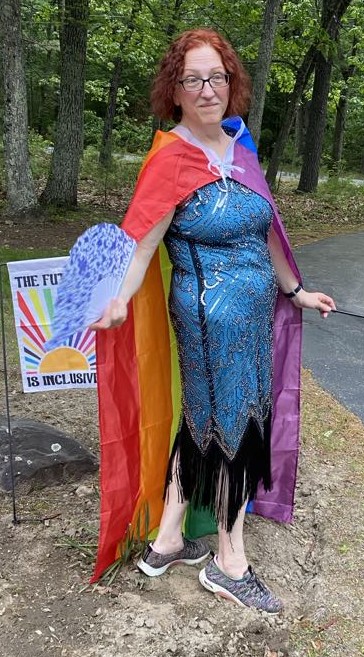
TB here. Here’s Miranda in a flapper dress and rainbow cape. Is she a 1920s superhero? Also, don’t tell Miranda’s mom that the plants underneath Miranda’s feet probably didn’t survive the accidental stomping. Does this dent her superhero status?
GREAT PRIDE EBOOK GIVEAWAY
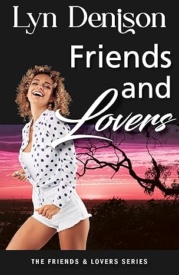
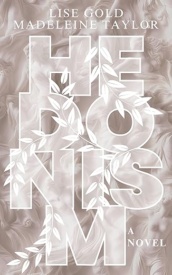
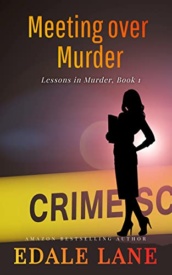
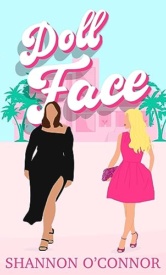
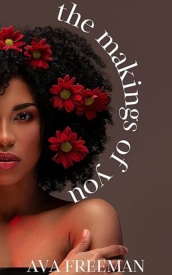
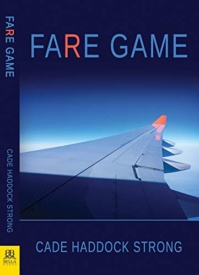
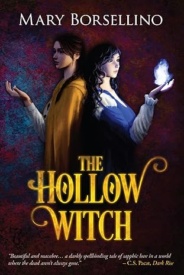
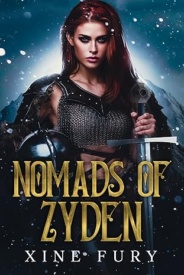
We asked authors to donate eBooks for a massive giveaway and wowzers, so many authors are taking part. Every day in June, there will be a new eBook giveaway. So not only will you see another pride photo, but you can enter to win loads of eBooks!
A few things about the giveaway. They’re open internationally. Authors will be responsible for delivering the eBooks. You WILL NOT be signed up to anyone’s newsletter when you enter.
Today’s giveaway has 57 books involved. One winner will be selected on June 22. That’s right. One lucky reader will get 57 books!
THE JUNE 18 WINNER HAS BEEN NOTIFIED
We’re thrilled to announce the eighteenth Great Pride Giveaway winner has been sent an email. They won 58 eBooks featured on June 18, 2025.
The winner for June 19 will be selected tomorrow. There’s still time to enter by clicking here. Don’t wait. It closes later today.
QUEER TRIVIA
Before we get to all the wonderful books involved in today’s giveaway, we want to share some queer trivia. It’s the former historian and teacher that compels TB to pull together the daily trivia. So many amazing and brave people in history paved the way for the rest of us. The fight isn’t over, but while we keep showing up it’s important to remember those who came before us.
Here’s today’s trivia:
She was born on June 3, 1879, in Yalta, Crimea, in the Russian Empire. Although 1879 is the accepted year of her birth, some sources have cited 1878 or even 1876. She was the youngest of three children born to Jewish parents and grew up in a dysfunctional family. After her parents divorced when she was eight, she was shuffled among boarding schools, foster homes, and relatives.
As a teenager, she developed an interest in the theatre and took acting lessons at the Academy of Acting in Moscow. She joined Constantin Stanislavski’s Moscow Art Theatre. Her theater career flourished early, and by 1903, she had become a major star in Moscow and Saint Petersburg. She toured Europe with her boyfriend Pavel Orlenev, a flamboyant actor and producer, performing in cities such as London and Berlin. In 1905, they moved to New York City and established a Russian-language theater on the Lower East Side. The venture did not succeed, and while Orlenev returned to Russia, she remained in New York.
She was signed by the American producer Henry Miller and made her Broadway debut in New York City in 1906, earning both critical and popular acclaim. Her English-language debut came that November when she played the title role in Hedda Gabler. She reportedly learned English in just five months. She quickly became extremely popular, and a theater on 39th Street was named in her honor. She remained a major Broadway star and often appeared in plays by Ibsen and Chekhov.
Her film career began when she was 37 years old. In 1917, she negotiated a contract with Metro Pictures, a precursor to MGM, which included a weekly salary of $13,000. She relocated from New York to Hollywood, where she made a number of highly successful films for Metro and earned considerable income.
She wrote screenplays using the pseudonym Peter M. Winters and directed films that were officially credited to her partner Charles Bryant. In her film adaptations of works by writers such as Oscar Wilde and Henrik Ibsen, she employed filmmaking techniques that were considered daring at the time. Her projects, including A Doll’s House (1922), based on Ibsen’s play, and Salomé (1923), based on Wilde’s, were both critical and commercial failures. Despite this, Salomé later became a cult classic and is now regarded as a feminist milestone in film.
By 1925, she could no longer afford to invest in additional films, and her financial backers withdrew their support. In 1927, she became a naturalized citizen of the United States. With limited opportunities remaining in Hollywood, she returned to New York to continue performing on Broadway.
Between 1917 and 1922, she held considerable influence and power in Hollywood. She played a role in launching the careers of both of Rudolph Valentino’s wives, Jean Acker and Natacha Rambova. Although she had an affair with Acker, it remains unclear whether her relationship with Rambova ever became sexual.
She is confirmed to have had romantic relationships with actress Eva Le Gallienne, film director Dorothy Arzner, writer Mercedes de Acosta, and Dolly Wilde, the niece of Oscar Wilde. It is believed that she coined the phrase “sewing circle” as a coded way to refer to lesbian or bisexual actresses of her time who kept their sexuality hidden.
Do you know her name? The answer can be found below all the books.
TODAY’S ENTRY FORM:
If you have trouble submitting your email, delete the autofill and type in your email.
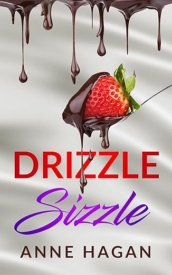
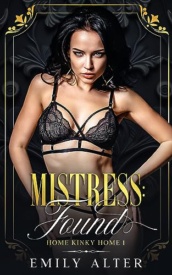
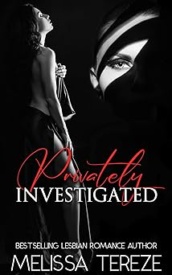
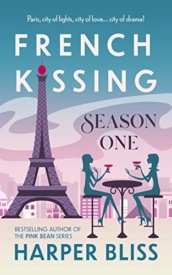
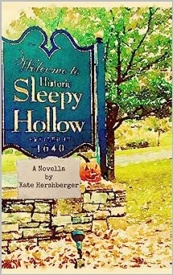
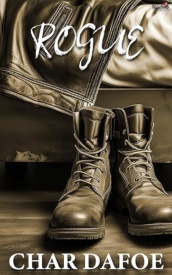
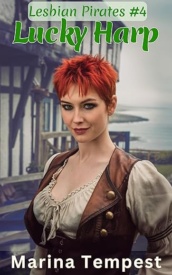
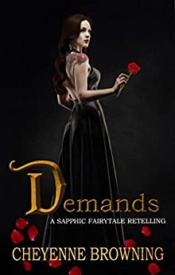
NOW FOR ALL THE BOOKS IN THE GIVEAWAY
Don’t forget to scroll to the bottom for today’s trivia answer!